
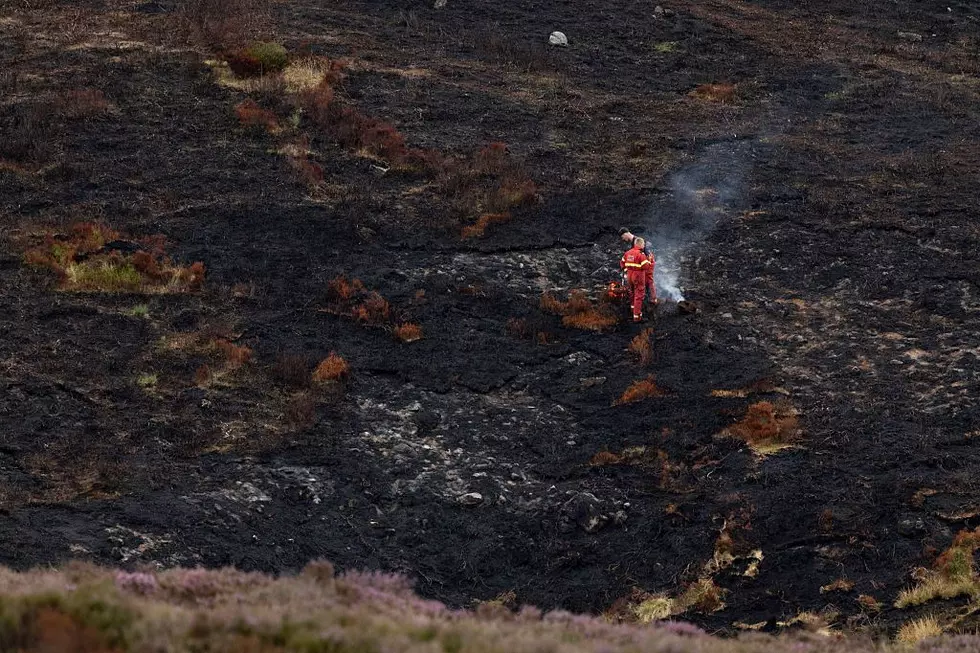
Nunamaker Fire Near Kahlotus Burns 25K Acres, Now 80 Percent Contained
Multiple agencies have been battling the Nunamaker Fire, which broke out over the weekend, not far from Kahlotus and south of Washtucna in northeastern Franklin County.
The Fire Rapidly Grew to Over 20,000 Acres
According to various sources, including the National Interagency Fire Center and the Western Fire Chiefs Association, the blaze was spotted sometime on Saturday, about 7 miles southeast of Kahlotus.

Initially it triggered closures of State Route (SR) 261, but some road closures have been lifted. Several reports say as many as 1,200 fire fighters have been attacking the blaze, which is now, as of Monday, said to be 80 percent contained.
Any Building or Other Losses?
There have not yet been any reports of structural or other losses from the fire, Officials say they believe it was human caused, but have not said exactly what triggered it.
Watch Duty online has a map of the fire area, and region, which can be seen by clicking here. (map courtesy of Watch Duty online)
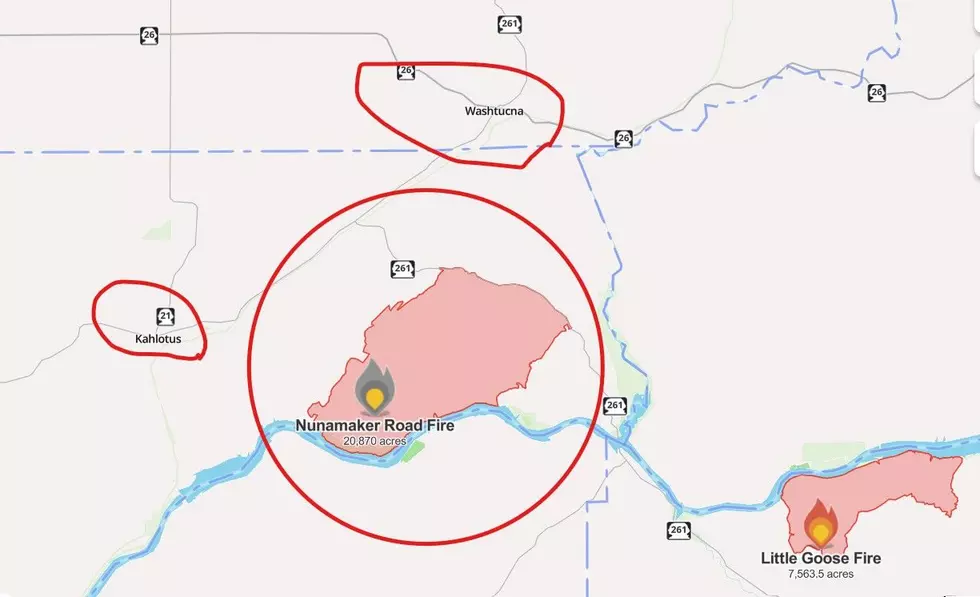
To the southeast, not far from Starbuck, other crews are battling the Little Goose Fire, which is across the Snake River, and stands at about just over 8,000 acres, no containment level listed yet.
LOOK: The most expensive weather and climate disasters in recent decades
Gallery Credit: KATELYN LEBOFF
More From 870 AM KFLD





![Prosser Football’s Home Opener Entrance September 10th is Epic [VIDEO]](https://townsquare.media/site/136/files/2026/09/attachment-9-11-prosser-pd-football-home-opener-entrance-still-image.jpg?w=980&q=75)

